This content was aggregated from local dealer data and insights provided by the USA Today Network Automotive Insights team using Google Gemini and the Vehicles For Sale Near Akron marketplace writing team.
Owning an electric SUV without a home charger is possible, but it requires more planning than plugging in overnight in your own garage. For Akron drivers considering the 2026 Chevrolet Equinox EV, the key question is whether public charging fits their commute, parking arrangements, schedule, and tolerance for making charging stops part of the week.
Public charging can work for drivers who have reliable stations near home, work, shopping destinations, or regular routes. It can be less convenient when chargers are far away, busy, incompatible with the vehicle’s charging needs, or unavailable when required. Before choosing an electric SUV, build a realistic charging routine around places you already visit rather than assuming charging will always be easy to find.
Public charging generally involves locating a compatible station, checking its availability and pricing, connecting the vehicle, and allowing time for the charging session. The experience depends on the station’s charging speed, the vehicle’s capabilities, the battery’s current charge, and conditions that can affect charging performance.
For someone without home charging, the most useful distinction is between slower AC charging and faster DC charging. AC charging may be practical when a vehicle can remain parked for an extended period, such as during work or a longer visit. DC fast charging is designed to add energy more quickly at compatible stations, but charging speed can vary and the session may take longer than expected.
Before relying on a public charging location, check:
Whether the station is compatible with the specific 2026 Chevrolet Equinox EV.
Whether it supports the charging method you plan to use.
Current access instructions, payment requirements, and pricing.
Typical availability during the times you expect to charge.
Whether the location is convenient enough to visit regularly.
Do not plan around a single charger if a disruption would leave you without a practical alternative. Identify a primary charging location and at least one backup near your home, workplace, or frequent destinations.
The Chevrolet Equinox EV is an electric SUV intended to combine everyday passenger transportation with battery-electric driving. For shoppers who cannot charge at home, the vehicle’s usefulness depends not just on its advertised range but also on how that range fits their actual routes and charging opportunities.
Range figures and equipment can vary by configuration, and real-world driving conditions affect energy use. Cold weather, cabin heating, highway speeds, driving style, terrain, and the amount of cargo carried can all influence how far a vehicle travels between charges. Akron-area winters make it especially important to avoid building a routine around the most optimistic range estimate.
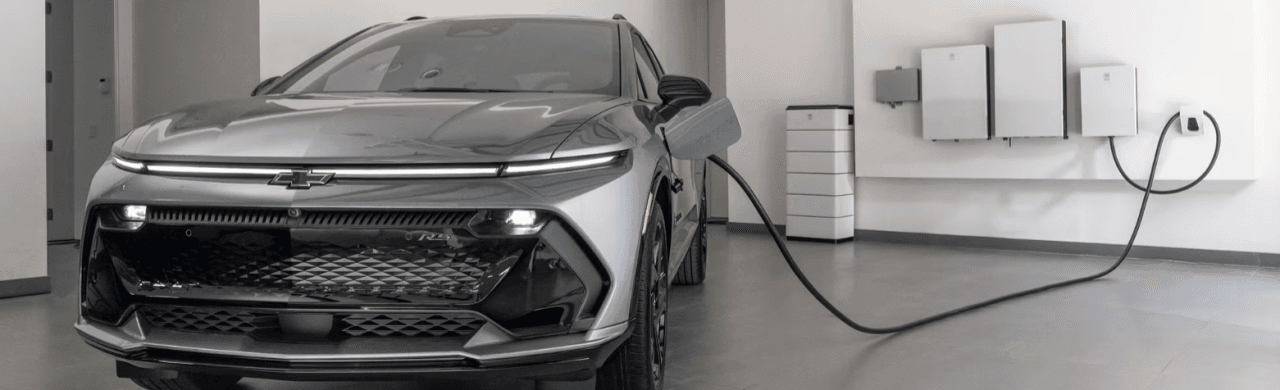
When evaluating a 2026 Chevrolet Equinox EV, ask the dealer to confirm the exact configuration and review the vehicle’s charging instructions. Check which charging connectors and charging capabilities apply to the specific model, and verify any included charging equipment rather than assuming a cable or adapter is supplied.
Consider these ownership questions:
What range is listed for the exact configuration?
How does the vehicle’s charging capability match the stations you can realistically access?
What route planning tools are available in the vehicle or through compatible apps?
What charging equipment is included, and what would need to be purchased separately?
What warranty coverage applies to the battery and other electric-vehicle components?
A test drive is an opportunity to evaluate comfort, visibility, controls, and everyday usability. It cannot, by itself, establish how convenient public charging will be. That requires checking local station locations, access conditions, and the time you can set aside for charging.
Home charging offers convenience because the vehicle can often be connected while parked overnight. Without it, drivers need to treat charging as a planned part of their schedule. That does not necessarily make EV ownership impractical, but it changes how a driver manages time and energy.
Start by mapping your typical week. Note your daily mileage, regular parking locations, and the periods when the vehicle sits unused. Then compare those patterns with nearby public charging options. A station close to work or a place you visit for an hour or more may be more useful than one that requires a dedicated trip.
Use this charging-plan checklist:
Map routine stops: Identify compatible stations near work, grocery stores, gyms, and other regular destinations.
Check real access: Confirm operating hours, parking rules, fees, and whether charging requires an app or account.
Estimate time: Allow for connection, payment, charging, and any wait for an available charger.
Plan for winter: Leave a sensible range buffer when temperatures are low or travel conditions are uncertain.
Keep a backup: Know where you can charge if your preferred station is occupied or out of service.
Review costs: Compare public charging prices and any session or parking fees with your expected usage.
Public charging rates are not uniform. Some locations charge by energy consumed, while others may use time-based pricing or add fees under certain conditions. Review the station’s current pricing before starting a session.
If you live in an apartment or rent your home, ask the property manager whether charging installation or access to shared charging is possible. Even if installation is not currently available, a workplace or nearby public station may make a predictable routine feasible. The important step is to verify access before buying rather than counting on a future charger installation.
For Akron-area drivers, the best charging plan reflects the places they travel in ordinary life. A short commute with a dependable charger near work may be easier to manage than frequent long-distance driving with no convenient charging stops. Weekend trips also deserve consideration because the availability of stations along the route may differ from what you experience close to home.
Before buying, simulate a typical week. Estimate how much driving you do, identify when the vehicle could be parked near a charger, and check whether you would need to make special trips solely to recharge. Include occasional longer journeys and seasonal changes in your planning.
During a dealership visit, use this test-drive and ownership checklist:
Confirm the exact model year, configuration, and documented range information.
Ask for a demonstration of the charging-port location and charging guidance.
Discuss the differences between compatible AC charging and DC fast charging.
Review the owner’s manual guidance for cold weather and battery use.
Estimate charging expenses using stations you expect to use.
Check whether your regular parking location has any restrictions on charging.
Request written details about applicable warranty coverage and included equipment.
Ron Marhofer Chevrolet serves the Akron marketplace. Ask the dealership to confirm the details of the specific vehicle and to clarify which charging accessories are included. Separately, use a current charging network map to verify public station locations and access. Vehicle information and charging availability should both be checked before making a purchase decision.
Yes, it can be possible if you have dependable access to compatible public or workplace charging and can accommodate the time required. The practicality depends on your mileage, schedule, local station availability, and backup options. Map a realistic weekly charging routine before deciding.
It can be, because public charging may require travel to a station, waiting for access, and allowing time for a session. However, drivers who can charge near work or during regular errands may find it manageable. The difference depends on location, station reliability, and daily habits.
Cold weather can affect energy consumption and charging performance, so avoid relying on the maximum advertised range for every trip. Check the vehicle’s cold-weather guidance, allow a practical range buffer, and identify compatible charging stations along regular routes. Confirm the exact vehicle’s specifications with the dealer.
Verify the vehicle’s configuration, range information, charging capabilities, included equipment, and warranty coverage. Then check compatible public stations near home, work, and common destinations. Compare charging prices and access requirements, and make sure you have an alternative if your preferred station is unavailable.
The total depends on the stations you use, their pricing method, how much energy you need, and any applicable session or parking fees. Check current rates on the charging network’s own listing or app. Estimate costs using your expected driving rather than relying on a general average.
Written for https://vehiclesforsalenearakron.com
By the USA TODAY Network Automotive Insights Team, in collaboration with Ron Marhofer Chevrolet and the Vehicles For Sale Near Akron - Beacon Journal Edition.
Disclaimer: This article's content is intended for informational purposes only. Vehicle specifications and features are based on data provided by J.D. Power and local dealerships and may vary by individual vehicle, VIN, trim, configuration, packages, and optional equipment. Vehicle images may not depict the exact model, trim, features, packages, accessories, or specifications described. Vehicle pricing, availability, features, and specifications are subject to change without notice. Please reference the dealership's vehicle listing and window sticker or consult the dealership directly for complete and accurate details.