This content was aggregated from local dealer data and insights provided by the USA Today Network Automotive Insights team using Google Gemini and the Vehicles For Sale Near Akron marketplace writing team.
Winter driving around Akron can mean cold starts, frosty windows, slushy roads, and changing conditions throughout the same trip. For drivers considering a 2026 Chevrolet Trailblazer, comfort in cold weather involves more than the heating system. All-wheel drive availability, visibility, cabin controls, tire choice, and the vehicle’s specific comfort features all deserve attention.
The Trailblazer is a subcompact SUV that may appeal to drivers who want everyday maneuverability with a higher seating position and flexible passenger and cargo space. Whether it is the right winter vehicle depends on your commute, parking situation, comfort preferences, and the configuration you choose. A careful walkaround and test drive can help you determine which features matter most for your routine.
Akron-area winters can bring cold temperatures, snow, slush, and icy patches. No SUV can remove every winter-driving risk, so it is important to consider both the vehicle’s equipment and the driver’s preparation. A useful subcompact SUV buyer’s guide looks at traction, visibility, cabin comfort, and the condition of the tires rather than treating one feature as a complete winter solution.
All-wheel drive, where equipped, can help distribute power to the wheels when accelerating on slippery surfaces. It does not guarantee shorter stopping distances or prevent skidding while cornering. Tires designed for winter conditions, cautious speeds, and extra following distance remain important.
Before shopping for a 2026 Chevy Trailblazer, consider these winter priorities:
Traction: Check whether the specific vehicle has front-wheel drive or all-wheel drive.
Tires: Inspect the installed tires and ask about suitable winter tire options for your driving conditions.
Visibility: Evaluate windshield defrosting, rear visibility, mirrors, and lighting.
Cabin warmth: Verify which heating and comfort features are included on the exact trim.
Daily convenience: Consider how easy the controls are to use while wearing gloves and whether the seating position suits you.
Cargo practicality: Make sure there is enough room for winter supplies, bags, and everyday items.
Your regular route also matters. A short commute on well-maintained roads may create different demands than frequent early-morning travel on untreated roads. Think about where you park overnight, how often you drive before roads are cleared, and whether your schedule allows you to avoid severe weather when necessary.
The 2026 Chevrolet Trailblazer should be evaluated as a complete vehicle, not just as a winter-driving package. Cabin layout, driving position, visibility, available drivetrain, and convenience features all influence daily usability. Exact equipment can vary by trim and configuration, so confirm the details of the vehicle you are considering instead of assuming every Trailblazer has the same features.
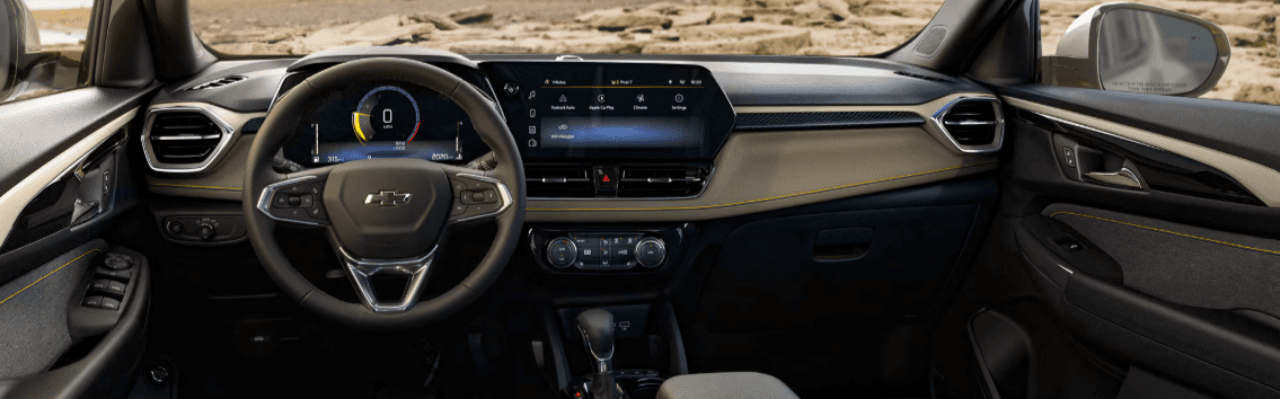
During a dealership walkaround, take time to explore the controls and seating position. Check whether you can adjust the seat and steering wheel comfortably, whether important controls are easy to reach, and whether the view out of the windshield and side windows works for you.
Ask the dealer to confirm the following details:
Which drivetrain is installed and whether the vehicle has all-wheel drive.
Which heating, seat-comfort, and other cold-weather features are included.
How the climate controls and windshield defrosting functions operate.
What tire type and size are fitted to the vehicle.
Which driver-assistance features are included and what their limitations are.
What maintenance and warranty information applies to the exact vehicle.
Do not assume that heated seats, a heated steering wheel, remote start, or any particular package is standard. Availability depends on the specific configuration and equipment. Ask to see the features operating and have any important equipment confirmed in writing.
A test drive can also help you judge acceleration, steering feel, braking response, and cabin comfort. Normal road conditions may not replicate snow or ice, however, so use the drive to assess basic control and ergonomics rather than attempting to test traction in unsafe conditions.
The most valuable winter features are the ones that address your everyday needs. A driver who parks outside overnight may place more importance on convenient cabin preconditioning and effective defrosting, while someone who regularly travels on snowy roads may focus on drivetrain choice and tires.
Use this checklist to rank your priorities:
Heating and defrosting: Check how quickly the cabin feels comfortable and how the vehicle clears fog or frost from the windows.
Heated comfort features: Verify whether heated seats or other available comfort equipment is fitted to the specific vehicle.
All-wheel drive: Consider whether the available AWD configuration fits your routes, while remembering it does not replace appropriate tires or careful driving.
Visibility: Check mirror adjustment, rear-window visibility, lighting, and the ease of clearing snow from the vehicle.
Climate-control usability: Make sure you can adjust temperature and airflow without struggling to find controls.
Winter storage: Consider room for a snow brush, gloves, emergency supplies, and other items you want to carry.
It is worth checking the practical details of any feature that matters to you. For example, ask how remote start operates on the exact vehicle and whether any conditions or settings affect climate control. Review the owner’s manual for instructions on operating the vehicle in cold weather.
Winter readiness also depends on maintenance. Keep tires properly inflated, maintain suitable tread depth, check washer fluid rated for cold conditions, and follow the recommended maintenance schedule. Clear snow and ice from windows, lights, mirrors, and the vehicle’s roof before driving. These habits support visibility and safety regardless of which SUV you choose.
A winter-friendly SUV still needs to work during the other seasons. Consider how the Trailblazer fits your normal commute, parking space, passenger needs, shopping trips, and weekend plans. A vehicle that feels comfortable during a cold-weather test drive should also be practical when temperatures rise and you no longer need the heater.
When you visit a dealership, test the features you will use regularly. Adjust the driver’s seat, explore the climate controls, check visibility when parking, and make sure the cabin layout feels intuitive. If you often carry passengers, check rear-seat access and comfort. If you bring winter gear along, assess the cargo space with your typical items in mind.
Use this test-drive checklist:
Check the driving position and outward visibility.
Test the heating and defrosting controls while the vehicle is safely parked.
Confirm which drivetrain and comfort features are included.
Ask about the installed tires and suitable winter alternatives.
Review the vehicle’s maintenance schedule and warranty details.
Compare the full purchase quote, including any optional equipment and applicable fees.
Ron Marhofer Chevrolet serves the Akron marketplace. Ask the dealership to confirm the exact model year, drivetrain, trim, and installed features before you make a decision. Equipment and inventory can change, so verify the details of the individual vehicle rather than relying on a general model description.
It may suit your needs, depending on the vehicle’s drivetrain, tires, equipment, and the roads you regularly travel. All-wheel drive may help with acceleration on slippery surfaces when equipped, but it does not eliminate winter hazards. Appropriate tires, careful driving, and good visibility remain essential.
Do not assume every vehicle has the same drivetrain. Confirm whether the specific Trailblazer you are considering has front-wheel drive or all-wheel drive. Ask the dealer to verify the configuration and explain how it aligns with your normal routes and winter-driving needs.
Test the climate controls and windshield defrosting, and verify whether the vehicle includes heated seats, a heated steering wheel, remote start, or other features you value. Equipment can vary by trim and configuration. Ask for a demonstration and confirm important features on the specific vehicle.
Assess the seating position, visibility, steering, braking feel, and ease of using the climate controls. Confirm the drivetrain and tire information, too. A normal test drive cannot establish how a vehicle will behave on ice, so avoid testing traction in unsafe conditions.
No. All-wheel drive can help a vehicle put power down when accelerating, but it does not guarantee shorter braking distances or prevent a loss of control. Tire condition, appropriate winter tires, reduced speed, and extra following distance remain important in cold-weather driving.
Written for https://vehiclesforsalenearakron.com
By the USA TODAY Network Automotive Insights Team, in collaboration with Ron Marhofer Chevrolet and the Vehicles For Sale Near Akron - Beacon Journal Edition.
Disclaimer: This article's content is intended for informational purposes only. Vehicle specifications and features are based on data provided by J.D. Power and local dealerships and may vary by individual vehicle, VIN, trim, configuration, packages, and optional equipment. Vehicle images may not depict the exact model, trim, features, packages, accessories, or specifications described. Vehicle pricing, availability, features, and specifications are subject to change without notice. Please reference the dealership's vehicle listing and window sticker or consult the dealership directly for complete and accurate details.